





The deadlift is one of the most effective compound exercises for building strength, developing your posterior chain, and improving overall lifting performance. But it’s also a movement where small technical mistakes can become obvious once the weight gets heavy. If you’ve ever struggled to break the bar off the floor, felt your lower back doing most of the work, or noticed your form breaking down during heavier sets, your setup might be holding you back more than your strength.
Building a stronger deadlift isn’t just about adding plates every week. It comes down to choosing the right variation, positioning your body efficiently, maintaining tension throughout the lift, and knowing when you’re ready to increase the load. Whether you’re a beginner or an experienced lifter chasing a new personal record, improving these fundamentals can make your training more consistent and help you manage unnecessary stress.
Which Deadlift Variation Should You Be Doing?
Not everyone will feel comfortable or perform equally well with the same deadlift variation. Your limb proportions, hip mobility, training history, and overall goals can influence which technique works best for you. That’s why it’s worth understanding the differences between conventional, sumo, trap-bar, and Romanian deadlifts rather than assuming the traditional conventional stance is the only correct option.

Conventional deadlifts typically involve a narrower stance, with the hands gripping the bar outside the legs. They place substantial demands on the hip extensors, back musculature, and grip. Sumo deadlifts use a wider stance with the hands positioned inside the legs, changing the joint angles and mechanical demands of the lift. Trap-bar deadlifts place the lifter inside a hexagonal bar, often allowing a more upright torso and different contributions from the hip and knee extensors.
Romanian deadlifts are another useful variation, particularly for training the hip hinge and loading the hamstrings through a controlled range of motion. Unlike conventional deadlifts, Romanian deadlifts generally begin from a standing position rather than with the bar resting on the floor.
Research comparing conventional, sumo, and hex-bar deadlifts has found differences in joint mechanics and muscle demands. However, these differences don’t establish that one variation is universally better or safer for everyone. The right choice depends on what you’re trying to improve and which movement allows you to train effectively.
Get Your Deadlift Stance and Setup Right
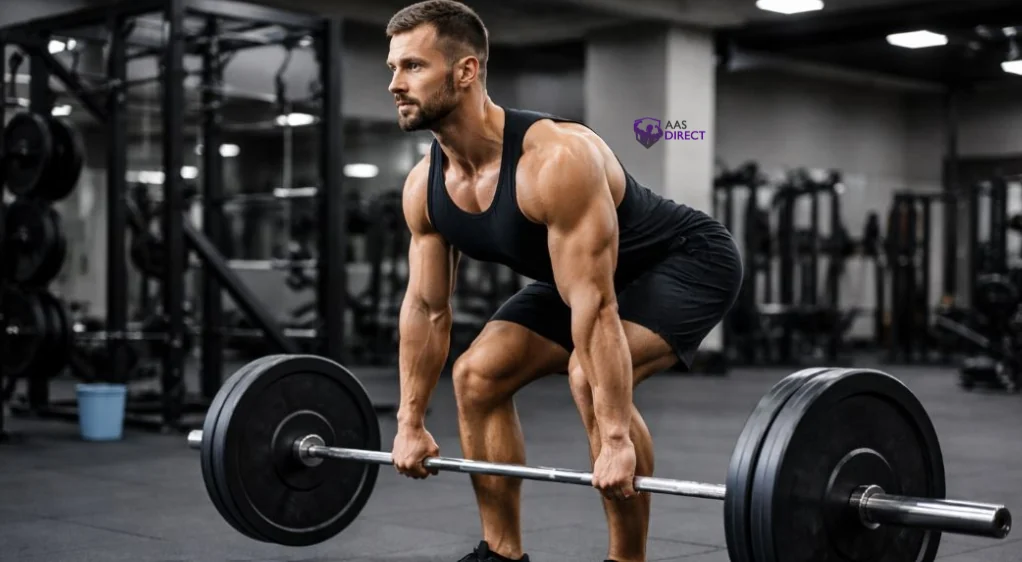
A good deadlift begins before the bar leaves the floor. For a conventional pull, start with your feet approximately hip-width apart and position the bar close to your midfoot. Your toes can point slightly outward depending on your natural stance and comfort.
From there, push your hips backward and bend your knees enough to reach the bar without losing a stable torso position. Your arms should remain straight, with your hands positioned just outside your legs. Your shoulders will generally be over or slightly ahead of the bar, although exact positioning varies with individual proportions.
One common mistake is forcing the hips too low, turning the setup into something that resembles a squat. When this happens, the hips may rise before the bar moves, making the initial position difficult to maintain. Setting the hips excessively high can create the opposite problem, increasing the demands on the back and reducing the contribution of the legs.
The goal isn’t to copy another lifter’s exact setup. It’s to find a position where you can create tension, maintain balance, and apply force efficiently.
Why Core Bracing Matters More Than You Think
Core bracing is one of the most important skills in deadlifting, yet it’s often overlooked by lifters who focus entirely on how much weight is on the bar.
Before initiating the pull, take a controlled breath and create tension through your abdominal muscles and surrounding trunk. Think about expanding and bracing your midsection rather than simply pulling your stomach inward.
This helps create trunk stiffness, allowing the muscles surrounding your spine to contribute to stability while your hips and legs generate force.
A useful way to think about bracing is to prepare your torso as though you’re about to receive a light impact to your midsection. You want controlled tension without unnecessary movement or excessive spinal extension.
Breathing strategies can differ depending on the weight, repetition range, and individual health considerations. Prolonged breath-holding can produce large temporary increases in blood pressure, so people with relevant medical conditions should seek appropriate guidance.
Bracing won’t eliminate every injury risk, but it is an important part of maintaining consistent positioning throughout a demanding lift.
Keep the Bar Close and Build Tension Before Pulling
One of the simplest ways to improve deadlift efficiency is to pay attention to the bar path.
When the bar travels too far away from your body, the horizontal distance between the load and your joints increases. This can change the mechanical demands of the lift and make the movement feel considerably harder.
Keeping the bar close to your legs helps maintain a more efficient pulling position. Your lats also play an important role in controlling the bar’s relationship to your torso.
Before lifting, establish tension through your grip, arms, back, and lower body. Many experienced lifters call this “pulling the slack out of the bar.” Rather than suddenly jerking upward, gradually apply force until your body and the barbell are ready to move together.
Once you’ve created tension, push through the floor while extending your knees and hips in a coordinated manner.
The bar should rise smoothly without the hips shooting upward prematurely or the torso losing its starting position.
Common Deadlift Form Mistakes That Can Hold You Back
Even experienced lifters develop technical habits that become more noticeable as the load increases. Identifying these mistakes early can improve consistency and help you avoid unnecessary mechanical stress.
One common issue is starting with the hips too low or too high. Both positions can make it harder to coordinate the legs, hips, and back during the initial pull. Another is allowing the bar to drift forward, increasing the distance between the load and the body.
Jerking the weight from the floor is also worth correcting. Building tension before the bar moves generally provides better control than trying to generate all your force through a sudden upward movement.
Excessive spinal rounding or arching can make it harder to maintain a consistent lifting position. However, it’s important to recognize that spinal movement is not automatically an injury, and the relationship between lifting technique and back pain is more complicated than simply labeling every deviation from a neutral spine as dangerous.
Another mistake happens at lockout. Some lifters lean backward aggressively after standing up, believing they need to push their hips farther forward to complete the repetition. In reality, the lift finishes when the hips and knees are extended and the body is upright. Excessive backward leaning doesn’t add anything useful.
Finally, avoid rushing the descent. Lower the bar with control by hinging at the hips and bending the knees as needed. Maintaining awareness of your position during the lowering phase helps prepare you for the next repetition.
How to Add Weight Without Sacrificing Your Technique
Progressive overload is essential for long-term strength development, but it doesn’t mean increasing the weight every time you train.
As you become stronger, you can gradually increase the training stimulus through load, repetitions, sets, or other programming variables. The right progression depends on your current ability, recovery, and how consistently you’re performing the movement.
An American College of Sports Medicine position stand recommends considering load increases of approximately 2–10% when a lifter can perform one or two repetitions beyond the target workload. However, this is general resistance-training guidance rather than a rigid rule for every deadlift session.
For a lifter working with heavier loads, even a small increase can feel substantial. Instead of forcing progress, focus on completing your planned repetitions with consistent technique and manageable effort.
If the bar starts drifting away from your body, your balance changes significantly, or you repeatedly lose your setup, it may be worth maintaining or reducing the load while addressing the underlying problem.
There’s nothing wrong with spending several weeks improving technique at the same weight. Stronger, more repeatable repetitions can set you up for better long-term progress.
Can Accessory Exercises Fix Your Deadlift Weaknesses?
Accessory movements can help address particular limitations, but choosing them should depend on the problem you’re trying to solve.
If maintaining a strong hip hinge is difficult, Romanian deadlifts can provide additional practice controlling the movement while loading the hamstrings and glutes. Paused deadlifts can help develop positional awareness during different parts of the pull.
Block pulls shorten the range of motion and can be useful when training specific positions or managing loading demands. Deficit deadlifts increase the pulling distance and change the demands near the start of the lift, although they aren’t appropriate for every lifter.
Grip exercises, upper-back training, and targeted posterior-chain work may also be useful depending on your individual weaknesses.
However, accessory movements aren’t a substitute for practicing the main lift. If your goal is to improve your conventional deadlift, regular exposure to a manageable conventional deadlift variation should remain part of your training.
How Often Should You Deadlift?
There isn’t one ideal deadlift frequency for everyone. Some lifters progress with one demanding deadlift session per week, while others benefit from multiple sessions that distribute training volume and intensity differently.
The appropriate frequency depends on your experience, recovery, total lower-body workload, and the other exercises included in your program.
For example, someone already performing heavy squats, Romanian deadlifts, and several demanding back exercises may need to account for the accumulated training stress before adding more deadlift volume.
Instead of judging recovery entirely by muscle soreness, consider your performance across several sessions. Repeated decreases in strength, difficulty maintaining technique, persistent fatigue, and reduced training motivation may indicate that your workload needs adjustment.
More frequent deadlifting is not automatically better. The goal is to train often enough to improve while allowing sufficient recovery between demanding sessions.
How to Know When Your Deadlift Form Is Improving
Progress isn’t always reflected by a new personal record. Sometimes the clearest improvements appear in how consistently you move the same weight.
A lift that previously felt unstable may become smoother. You might notice better balance, a more controlled bar path, or less difficulty maintaining your starting position.
Recording your sets from the side can help identify changes in bar path, hip position, and trunk control. Comparing videos taken under similar conditions can also reveal whether your technique remains consistent as the load increases.
Training logs provide another useful reference. Track your sets, repetitions, weights, and perceived effort rather than relying only on the heaviest lift you complete.
If you can move a given weight with greater control and lower perceived effort than before, that’s meaningful progress even when the number on the bar hasn’t changed.
Frequently Asked Questions
What is the best deadlift variation for beginners?
The best option depends on the individual’s mobility, proportions, and experience. Conventional and trap-bar deadlifts are common starting points, while Romanian deadlifts can help develop hip-hinge control.
Should the bar touch your legs during a deadlift?
Keeping the bar close to the legs generally improves mechanical efficiency. However, it doesn’t need to scrape aggressively against your shins to be considered a good repetition.
Is a rounded back always dangerous during deadlifts?
Not necessarily. Spinal movement occurs during lifting, and injury risk depends on multiple factors, including load, fatigue, training history, and individual tolerance. Excessive or uncontrolled changes in position can still be worth addressing.
How much weight should I add to my deadlift?
Progression should depend on your ability to complete the planned workload with consistent technique. Small increases are often useful, but there is no requirement to add weight every session.
Should I lean backward at the top of a deadlift?
No. The lockout is complete when your hips and knees are extended and you’re standing upright. Excessive backward leaning is unnecessary.
Can Romanian deadlifts improve conventional deadlift strength?
Romanian deadlifts can strengthen muscles involved in hip extension and improve hinge control. However, their transfer to conventional deadlift performance depends on individual weaknesses and overall training.
Final Thoughts: Better Deadlift Form Comes Before Bigger Numbers
A stronger deadlift begins with efficient movement, consistent technique, and sensible training progression. Choosing a variation that fits your body, building tension before the pull, maintaining an effective bar path, and developing trunk stability can all contribute to better lifting performance.
The goal isn’t to make every repetition look identical across every lifter. It’s to develop a technique you can reproduce consistently while managing the demands of increasingly challenging loads.
Adding more weight is only one measure of progress. Better control, stronger positioning, and improved confidence under the bar matter just as much.
A good deadlift isn’t simply the heaviest weight you can pull. It’s a lift you can perform consistently, control effectively, and continue improving over time.
For those who’ve been deadlifting for years, what made the biggest difference in your technique? Was it fixing your setup, learning how to brace properly, or switching from conventional to sumo or trap-bar deadlifts?