





You can quickly improve your soccer speed with these five high-impact agility drills: ladder drills for precise footwork, box jumps for building lower-body strength, reactive ball pursuits for improving game-like reactions, and sport-specific circuits that combine different movement patterns.
Do these two to three times a week, focusing on quality over number and making sure you get enough rest between sets. These simple-looking ways of moving are often what separate good players from great ones.
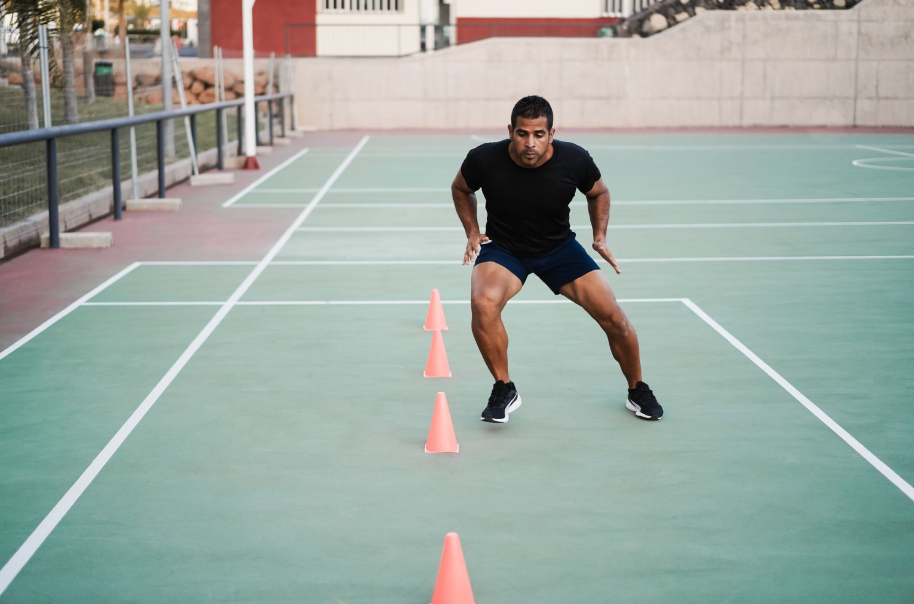
Cone Shuttle Runs for Quick Changes in Direction
To get around their opponents, all of the best soccer players need to be able to change directions quickly. Cone shuttle runs help you get better at this important skill by pushing your body to learn how to change directions while staying in control quickly.
Place five cones five yards apart in a straight line. Run as fast as you can to the first cone, touch it, and then slowly walk back to the starting point. Speed up right away and go to the second cone. Keep doing this until you’ve reached all five cones.
When you change directions, pay attention to how you’re accelerating: drive your arms, drop your hips, and push hard off your outside foot. Different cone patterns can make things more difficult. For example, zigzag patterns make it hard to move laterally, and diamond patterns make it feel like you’ll need to get away from guards in a game quickly.
Ladder Drills for Quick Footwork Development
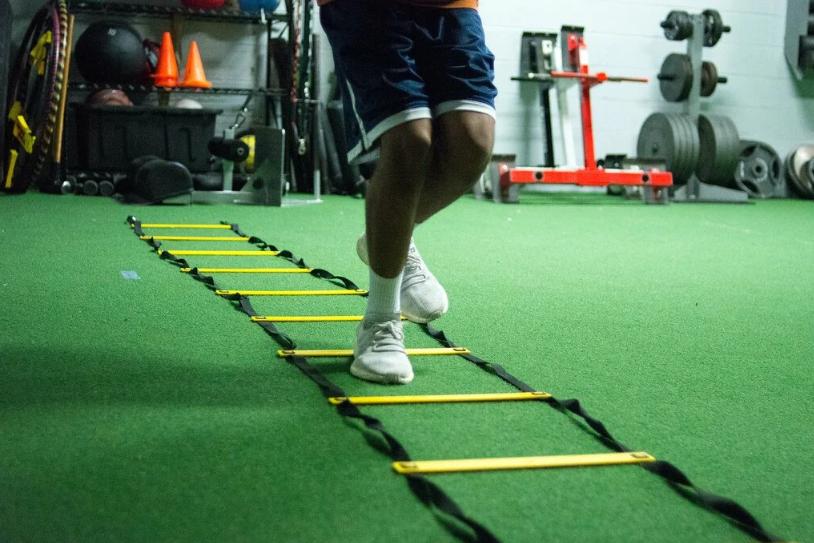
Great soccer players are able to control their feet very well. For practicing this important skill, agility stairs are the best thing to use. If you add two or three ladder workouts a week to your routine, you’ll see huge improvements in your soccer agility and ground contact time.
Before moving on to more difficult moves like the Icky Shuffle or the In-Out drill, start with simple moves like high knees and lateral shuffles. Each version tests different movement patterns that are necessary to do well on the field. At first, focus on how well you move rather than how fast you move. Good technique sets you up for a powerful first step.
To get the most out of your footwork training, have a partner show direction changes in the middle of a drill.
Box Jumps and Plyometric Exercises
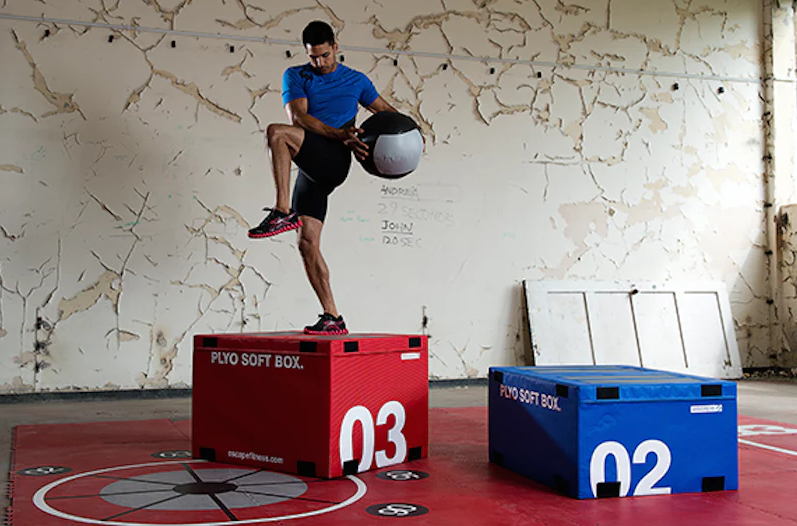
Four basic plyometric movements can make a huge difference in how fast and strong a soccer player is on the field. Box jumps make your lower body stronger, which helps you move quickly when you need to change directions or run for a loose ball.
Add depth jumps to these for better control of braking, which is very important when you need to stop quickly before changing directions. By adding lateral bounds, you can build up power that goes from side to side, like defensive shifts and attacking moves.
For real sport-specific drills, use single-leg hops with changes in direction that look like real games. You should slowly build up your plyometric fitness. Start with two to three workouts a week at a moderate level of intensity and work your way up to higher volumes.
In speed growth, remember that quality is more important than quantity. With perfect form, you can transfer as much power as possible to your moves on the field.
Challenges for Reactive Ball Pursuit
Reactive ball pursuit tasks are different from regular cone drills because they are more like real games, where you have to keep up with moving objects while staying fast and balanced. By making you react to real reactive cues instead of set patterns, these agility drills speed up your reaction time.
Set up a small space where one person can bounce or roll balls in any direction. You’ll run to catch them before they stop moving, and then you’ll switch to going laterally to get the next ball. It trains your brain to handle visual information while you make quick movements.
You’ll learn how to keep an eye on rival players, intercept passes, and change direction instantly when the ball changes hands during high-stakes game moments. It will directly improve your performance on the field.
Game-Specific Agility Circuits
Reactive tasks help you get better at moving on the spot. Game-specific agility circuits are the next level of training because they combine different movement patterns you’ll use in real games. In ways that are similar to games, these circuits use ladder drills, cone weaves, and directional runs together.
In your circuits, make sure there are changes between defense backpedaling and offensive forward runs. Do lateral shuffles and then fast diagonal runs to make it look like you’re following other players before breaking toward the ball. Keep your knees high, your arm drive strong, and your forward lean throughout the whole run.
The main benefit is that it teaches your body how to connect moves well instead of working on each one separately. When you’re protecting one moment and attacking the next, you need to be able to change your strategy quickly.