





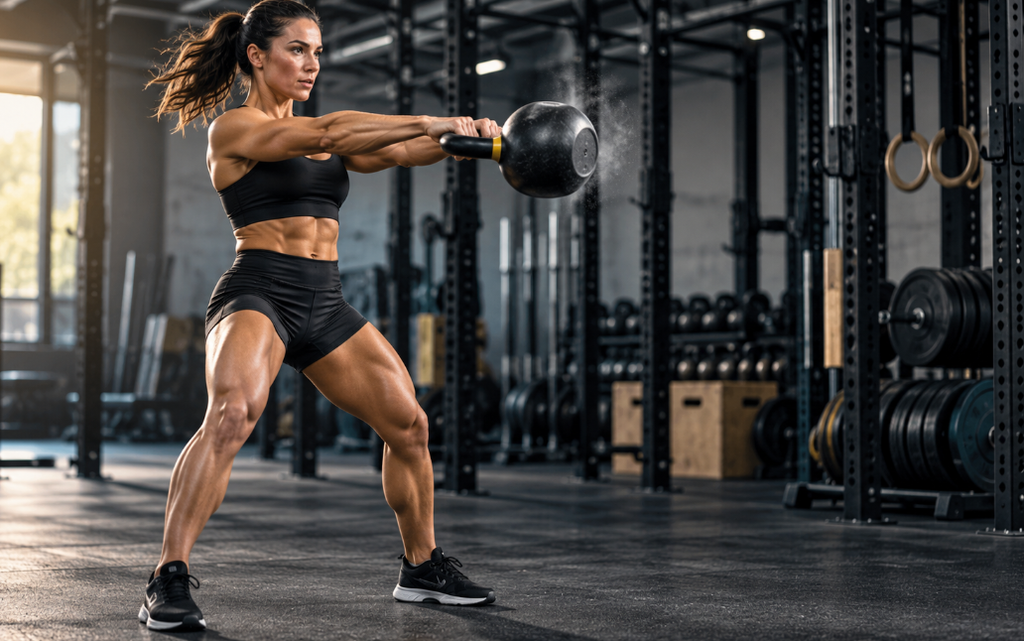
The kettlebell swing is one of the most effective movements you can train for building explosive power and burning fat simultaneously. It strengthens your entire posterior chain while combining strength and conditioning into a single exercise. You’ll initiate each rep with a powerful hip hinge, not a squat, keeping your spine neutral throughout.
Why the Kettlebell Swing Builds Power, Burns Fat, and Trains Your Whole Body
Few exercises pack as much value into a single movement as the kettlebell swing. It’s a ballistic, full-body exercise that builds explosive power, torches calories, and strengthens your posterior chain simultaneously. Unlike isolation exercises, it demands coordinated effort from your glutes, hamstrings, core, and shoulders in every rep.
From a metabolic training standpoint, swings push your heart rate high and sustain it, making them highly effective for fat loss training without long cardio sessions. You’re fundamentally combining strength and conditioning into one efficient tool.
What makes the swing especially powerful is its carryover. Whether you’re an athlete chasing speed, someone pursuing fat loss, or a lifter building functional strength, the kettlebell swing delivers measurable results across multiple fitness goals at once.
How to Perform the Perfect Kettlebell Swing With Flawless Form
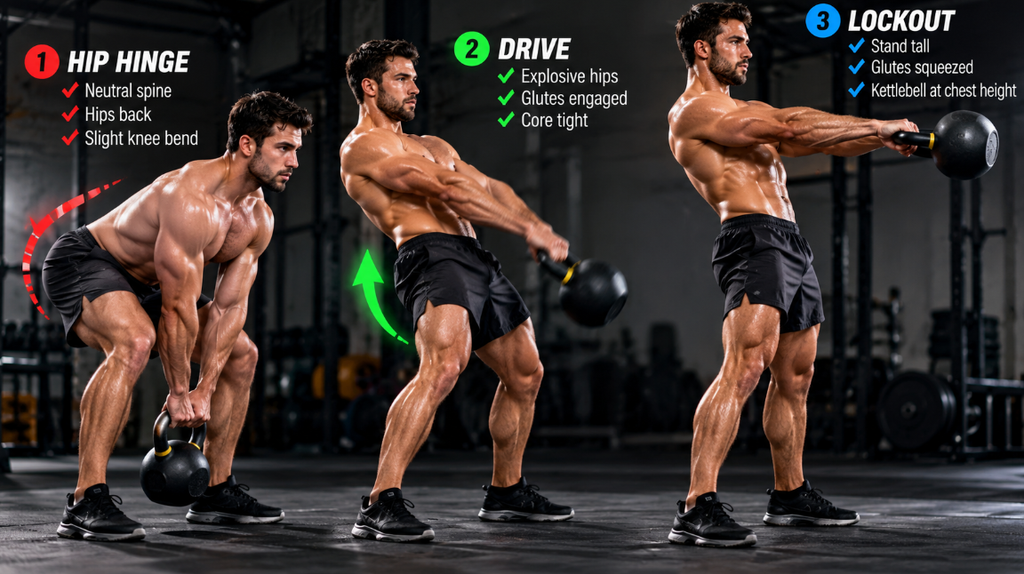
Mastering the kettlebell swing starts with one non-negotiable principle: it’s a hip hinge, not a squat. Stand with feet shoulder-width apart, grip the kettlebell firmly, and push your hips back while maintaining a neutral spine. Your knees bend slightly, not deeply.
Proper form and technique demand that you initiate every rep through explosive hip hinge mechanics, driving your hips forward aggressively to propel the bell.
Throughout this ballistic movement, core bracing is essential. Lock your abs and glutes simultaneously at the top of each swing. That moment of glute activation at full hip extension is where your power lives.
Control the descent, hinge back, and repeat with intention and precision.
The Most Common Swing Mistakes and Exactly How to Fix Them
Even small technique errors in the kettlebell swing can quietly undermine your results, increase injury risk, and rob you of the power you’re working hard to build. Recognizing common mistakes early protects your progress and sharpens your workout efficiency.
Relying on Your Arms: The swing isn’t a front raise. Drive through your hips, not your shoulders.
Losing a Neutral Spine: Rounding your lower back compresses your spine and kills power transfer. Brace your core and keep your back flat throughout.
Squatting Instead of Hinging: If your knees are traveling forward, you’re squatting. Push your hips back aggressively instead.
Wrong Weight Selection: Too light reduces hip drive intensity; too heavy breaks your form. Choose a kettlebell that challenges you without compromising technique during kettlebell swings.
The Best Kettlebell Swing Workouts for Fat Loss and Explosive Power
With your technique dialed in, it’s time to put those mechanics to work in structured workouts designed to maximize fat loss and explosive power. Conditioning workouts built around kettlebell swings deliver serious results when programmed with intention.
For fat loss, interval training works best. Try 20 seconds of swings followed by 10 seconds of rest for 8 rounds. This format spikes energy expenditure and keeps your metabolism elevated long after training ends.
For explosive power, perform 5 sets of 10 swings with full recovery between sets. It allows maximum hip drive and force output in each rep.
You can also combine both goals using EMOM formats, alternating heavy swings with bodyweight movements. Consistent programming across three to four weekly sessions produces measurable improvements in both strength and conditioning.
How to Add Weight, Volume, and Variation as You Get Stronger
Introduce variations like single-arm swings or offset-stance swings to improve stability and functional fitness. These shifts also expose weaknesses that heavier bilateral swings can mask.
For athletic performance, incorporate swing complexes that pair the movement with cleans or snatches. Progress one variable at a time to avoid overtraining and sustain long-term improvement.